The Government has been asked to speed up enactment of a law on establishment of a university at the Coast.
The task force formed to plan for the proposed university also requires money for its operations. The team was set up this week in a meeting of Members of Parliament and scholars from the region to explore its location and curriculum to be offered in the institution.
Egerton University’s deputy vice-chancellor Prof Shaukat Abdulrazak who chairs the 18-member team, said yesterday that the law will enable them complete their task on schedule.
Universities are set up by an Act of Parliament.
“Now that the Government has indicated its intention to build a university at the Coast, Parliament has to come up with an act establishing it. Once we have the legal framework, it will be easier for our committee to propose the structure and courses to be offered,” he said.
Courses and location
Prof Abdulrazak said they had divided the team into several sub-committees that would deal with courses, infrastructure and location.
During the meeting attended by seven MPs at the Coast provincial commissioner’s boardroom, it was suggested that the new university has campuses in each of the region’s 10 districts.
In addition, it was proposed that the institution be named Pwani university. A suggestion by Lamu West MP Fahim Twaha that it be called Kibaki University was overruled by scholars who said the country should end the culture of naming institutions after leaders.
Prof Abdulrazak said Sh1 billion set aside was not enough for construction of the institution.
“Sh1 billion can’t take us somewhere unless the university is built on existing infrastructure. Then we can start with courses requiring minimum input as we focus on the next course of action,” he said.
The leaders had suggested that the first intake be in September this year, but Prof Abdulrazak said, that will only be possible if the relevant law is enacted.
Form the senate
He said the committee would come up with courses once there was a university council and senate. “The senate can decide on courses to be studied or we adopt those approved in other universities,” he said.
________________________
Daily Nation
Story by JUMA NAMLOLA
Publication Date: 4/18/2007
Tuesday, April 17, 2007

Coast varsity team set up
A 17-member team was yesterday appointed to spearhead establishment of a university at the Coast.
The task force comprising scholars from the region, has been given a fortnight to come up with proposals on location of the university, infrastructure and curriculum.
MPs from the region will be ex-officio members.
Named Pwani varsity
During a stakeholders meeting chaired by Coast provincial commissioner Ernest Munyi, it was agreed that the new institution be named Pwani University.
Earlier, Lamu West MP Fahim Twaha had suggested that they name it Kibaki University in recognition of the President’s efforts to seek funds for the institution.
However, the other leaders and academicians overruled him saying Kenyans must stop the trend of naming institutions after leaders.
Some MPs had proposed that the university be situated at Kilifi Institute of Agriculture.
Members of the team include the Egerton University deputy vice-chancellor, Prof Shaukat Abdulrazak, and Moi University lecturer Prof Justin Irina.
Others are: Dr Athman Lali, Dr Mtana Lewa, Dr Juma Makopa, Dr Rita Lugogo, Dr Johnstone Kazungu, Dr Gabriel Katana and Dr Nesbert Mangale.
Ten districts
Supkem Mombasa branch chairman Sheikh Juma Ngao and Mombasa Catholic Diocese Education Secretary Fr Wilybard Lagho, are also members of the task force.
The leaders proposed that the new university should have campuses in each of the 10 districts in the province.
The MPs were: Chirau Ali Mwakwere (Matuga), Najib Balala (Mvita), Ramadhan Kajembe (Changamwe) and Suleiman Shakombo (Likoni).
Others were: Joseph Kingi (Ganze), Anania Mwaboza (Kisauni) and Mr Twaha (Lamu West). Provincial Administration assistant minister Joseph Kingi challenged the stakeholders to improve existing secondary schools in order to prepare students for the university.
_____________________
Daily Nation
Story by JUMA NAMLOLA
Publication Date: 4/17/2007
Sunday, April 8, 2007
Education decline in Lamu most worrying
When students, teachers and parents from well managed institutions countrywide, be it secondary schools or primary schools celebrated their good results in last year's examinations, we Lamu people were mourning.
Our own schools had performed dismally. For the parents, this was a bitter herb to swallow. A practical example is the Kiunga Primary School in the Amu zone of the Lamu East Constituency which did not yield any student to secondary school in last year’s examinations. It is worth mentioning that the main stakeholders in the education sector are so casual in matters to do with education as if they are waiting for a miracle to happen.
We all must understand that success only comes after hard work. But frankly speaking, the local District Education Officer does not seem to understand his duties. Lamu is like an academic Babel because not even the teachers understand their duties. For instance, the head teacher of Kiunga Primary School has now resorted to petty issues leaving educational development at stake.
This head teacher is becoming expert in abusing the local parents as ignorant and is constantly sending the pupils home to buy uniforms. His penchant for pettiness is killing the morale of the teachers to the detriment of the pupils' welfare. It is high time this teacher stopped harassing pupils over petty issues as uniforms because this is wasting valuable learning time.
Shee Kupi Shee,
Lamu.
Readeers Forums:
Sunday Times, April, 8, 2007
Wednesday, March 28, 2007
Why Kibaki should pick VP from the Coast

Hon. Chirau A Mwakwere
___________________________
By OMAR AHMED ALI
THE 62 million dollar question is this; is Ambassador Chirau Ali Mwakwere the emerging Coast political leader? Should his recent elevation to be the region’s populous Mijikenda community spokesperson be read as a sign of more things to come for this humble Matuga MP?
Does this elevation of Mwakwere mean he can not be ignored by NARC Kenya in the race for the vice presidential candidacy within the president’s party? Has he changed the equation of who is going to be the next Kibaki VP should he opt not to pick Moody Awori?
To answer these questions and many more, one has to dig deeper, analyse, and appreciate the intricate politics of Coast province. It is a fact that the seaside province lacks a political leader with a charisma and influence to rally the people by cutting across religious and tribal and party lines. The Transport minister is perhaps the contemporary politician from the region who fits the profile to be the region’s next political leader.
The challenges and hurdles facing the Coastal people when it comes to a unified political leader is the fact that the province is not a tight knit homogeneous society like Central and North Eastern provinces. There are three main tribal and two religious groupings that in one way or another make matters very complex for the province. The tribal groupings include the populous Mijikenda, the Waswahili/Arabs and the upper-Coast based Taitas/Tavetas communities. The two religious groupings are of course the majority Muslims and the strong Christianity presence led by Rev. Kalu, a Mijikenda himself.
Within the Mijikenda (sub-tribes) community there are complex divisions in itself. One major division is the fact that you find the populous Digos who 99 per cent plus adhere to Islamic faith, culturally attached to their Mijikenda kinsmen but connected religiously with their Waswahili/Arabs Muslim brethren and other Kenyan Muslims. The Giriama together with the rest of the smaller sub-tribes majority being Christians —there is a good percentage of Muslims too in this group —whereas they are culturally connected to the Digos, they also identify themselves with the rest of the Christians in the country.
The Taitas/Tavetas on their part regard themselves more as ‘up-country Kenyans’ than being Coastal people. This is perhaps because of the proximity of their location to the ‘up-country Kenya’ and the fact that majority of them are Christian adherents, the majority religion in ‘up-country’ Kenya.
The Waswahili and Arab communities although separate communities, are erroneously counted or bundled as one community in many spheres simply because they both happen to be hundred percent Muslims hence share common Islamic culture. The Waswahili and Arab communities also have their own complex issues although this is not the right forum to discuss them.
Having given this background there is one fundamental common mistake committed frequently by non-native Coastal political commentators, news analysts and journalists when penning political analyses about the region’s politics and Waswahili and Arabs communities. For instance, in their various analyses they only focus on the politics of Mombasa. To them Waswahili, Arabs and Mombasa is ‘what matters’ at the Coast. In addition, these people have a tendency to always consider Mombasa politics to be the politics of the province, as if Mombasa is Coast and Coast is Mombasa. The Mombasa politics that have been personified for many years by the then long serving Mvita MP and former cabinet member the late Sharrif Nassir and later in years by the former Kisauni MP and cabinet minister, Karisa Maitha.
The reality is that majority of Waswhaili and Arabs are not restricted to residing in Mombasa only. And Coast politics transcend outside the province’s largest metropolitan to as far-flung as Kiunga, Faza and Wasini.
Here is one political reality that commentators either deliberately ignore or perhaps lack clear understanding of the political realities of the region. The late Ronald Ngala being the exception to the rule, no Coast politician can become the province’s political leader’, kingmaker, or Mugogo, if he or she does not meet two main pre-requites amongst others qualifications. The kicker is that the person must hail from the Mijikenda community and in tandem must be a Muslim. The reason behind is pretty simple — Mijikenda is the most populous group in the province hence you must earn its respect and support.
Islam is the predominant religion in the province; Muslims in the region will not accept any one who does not believe in Allah as the region’s leader. All other qualifications, including being a Mombasa politician, a cabinet minister, assistant minister, are mere secondary.
The region has witnessed ‘claimers to the throne’ in the name of late Nassir and Maitha. With due respect to the two deceased individuals, these two former Mombasa politicians were claimers to the throne both of them separately came short of one of the two prerequisite for the coveted throne. Nassir was a Mombasa KANU strongman and former President Daniel arap Moi’s Coast’s point man and nothing more. Maitha on his part was Mombasa’s Kibaki-led Democratic Party strongman and the president’s point man in the province. Although the one time Local Government Minister liked to consider himself (and wanted other people to consider him) a Mugogo, he died never attaining such title. The reason why the former Mvita and Kisauni lawmakers could not become the province’s political leaders is because although a Muslim, Nassir was not a Mijikenda.
As for Maitha although he was a Mijikenda from the populous Giriama sub-tribe he was not a Muslim. I guess that is the reason why it was rumoured that Maitha secretly converted to Islam in an effort to get the legitimacy of becoming the political leader of the region.
One can be their respective political parties’ regional coordinators, or strongmen/women for the lack of a better word, but they are not necessarily the regional political leaders. With due respect to the Garsen MP Dunson Mungatana, he is too young, both in his age and politically to appreciate these realities. He came across as making too much noise and was being confused to be ascending to the regional political leadership.
This brings me to see the political importance of the elevation of the Transport minister as the Mijikenda community’s spokesperson. This is perhaps the beginning of the ascending of diplomat-turned politician to the vacuum position of the Coastal political leader. Mwakwere can not be the province’s political leader if he does not want to take the mantle. It is high time for Mwakwere to assume the mantle of the unelected Coast political leadership position that has remained vacant for a long time. The province needs someone who can work for them, can look after their interests et al.
The opportunity has presented itself and he meets the two pre-requisites needed for the position. Mwakwere can be the needed bridge between the differences the Coastal people have. In addition he fits the profile of ‘that missing leader’. He is a Mijikenda from the populous Digo community and is also a Muslim. He is the most educated and with the most government experience of any individual sent to parliament in the history of Coast province.
Although he is not the darling of the press, in fact the media love to hate him. But for those who know him, the Matuga MP is a very humble politician. Despite his closeness to President Mwai Kibaki, the man is still humble and never cocky or arrogant. Listen to what he said upon his elevation to be his community’s spokesperson: “I am not a king of the community but just their spokesman, each one of us is a leader in our own right.” Unlike some politicians one hardly sees the Matuga MP chest-thumping. He works very well with President Kibaki, his cabinet colleagues and fellow lawmakers.
Looking at his background, this is an individual who started his career from the scratch as a school teacher in Kilifi district who was ambitious and eventually attained two degrees from two highly respected United Kingdom’s universities. In his earlier life the Matuga MP spent many years in Mombasa while teaching at the then MIOME, now Mombasa Polytechnic. He was also the pioneer Principal of Kenya Ports Authority’s Bandari College. Before venturing into politics, he had served our country diligently as our diplomat in Zimbabwe and in the United Arab Emirates.
It is high time that a Coastal politician is considered for the number two slot and there is no better individual from the province who fits such a profile and who is close to the president than the Matuga lawmaker. When would the smaller Kenyan communities be able to at least have a vice president of the country? If the time will ever come for some one from a smaller community be named to the number two slot, then that time is in this year’s general election and no other. It is under Kibaki that the Coast people have been treated as equal citizens of Kenya in terms of appointments and spearheading developments. By picking Mwakwere as his running mate Kibaki will satisfy two major constituencies in tandem, — the Coast province and the entire Kenya Muslim community.
omarahmedali@gmail.com
http://www.timesnews.co.ke/09jan07/editorials/comm1.html
Try Majimboism to redress regional imbalances

Omar Ahmed Ali
________
It seems to me that in Kenya the mention of the word, Majimbo sends shivers down the spines of many Kenyans. Some Kenyans hate Majimbo with all the venom in their mammals’ systems. The exception to this rule is the Coast people who seem too happy to embrace federalism. Is Majimbo so bad a word or is the federal system of government that dreadful that it should be feared? I ask this question because one fails to understand why majority of Kenyans hate Majimbo and seem to always be up in arms when the word “Majimbo” is mentioned. Their hatred for this word is in most cases bamboozling.
Majimbo is a Kiswahili word simply meaning federalism. I suspect that majority of Kenyans have been made to believe (and now confuse) Majimbo with Coast people seeking succession. Federalism is a constitutional arrangement whereby power is divided between the national government and regional governments, whereas in the case of Kenya it would be ‘the provincial governments’. In short the power (political and economical) is transferred to the local people. Isn’t that the whole idea of peoples’ democracy?
Federalism does not mean that the country will be divided into tribal fiefdoms managed by chieftains. Nor is it a tactful way for the Coast people to seek political independence from the rest of Kenya like Eretria did in the great Ethiopian nation and now Kosovo seeking independence from Serbia. The country will not have a Kikuyu state, or a Luhya state, but Central and Western provinces respectively. Federalism will lessen if not eradicate the marginalization of certain regions or communities in the country. For instance, why should Luo Nyanza be the poorest region in the country where the people have no control to uplift their plight or situation? Or why should one region have the lion’s share of all senior Government appointments, where no one dare to question.
The major reason the United States is the most powerful nation both politically and economically is the fact that, the local people have control of their surroundings. It is a fact that the U.S has the best federal system of government in the world. Their system consist of one federal or national government, fifty states governments, and over three thousand (yes, 3,000) county governments. In addition power devolution from the county governments’ continues to move down to the municipal governments to small towns the sizes of Mariakani or Mtito Andei and smaller. To a large extent, the president of the United States or the governor of the any given state cannot tell the people what to do or not to do unless they go through (and get the approval of) their respective county and municipal governments. In Kenya the unitary government more or less favours the regions and the communities that produce the head of state, his powerful associates and underlings and senior government bureaucrats.
Let me cite a scenario to drive my point home. Let us take Lamu district as an example. In this district one is likely to have the District Commissioner, the District Officer and the District Education Officer all hail from other regions outside the Coast province. The DC could be from Nyeri, the DO from Narok and the DEO from Meru. With these illustrious individuals in control of the district matters and affairs, does one think they would really care or give a damn if Lamu schools do poorly in national exams? The poor performance of the district does not have any personal effect to them since they are not the natives of the district and as such they could care less. Ask yourself this question: Would this Lamu DC or DEO question the absence of educational scholarships to the district’s bright students? As far as they are concerned they are in the district to serve the interest of the State, serve their time and to further their careers. They expect and hope for a promotion after some years under their belt
without any track record of success.I can say this with certainty that if the country had a federal system of government, it is more than likely that Coast province would have a tourism industry training institution like Utalii College and a public university. Nyanza might have what the people feel they are missing or what the preceding governments might have refused to provide. Other provinces might have their concerns and they would take care of them. That is the benefits of Majimbo. It is not Raila Odinga becoming the Chieftain of Nyanza, Kalonzo Musyoka of Ukambani, President Mwai Kibaki of Central province and Chirau Mwakwere of Pwani, to name but four individuals.
Kenyans must keep in mind that most successful nations apart from the United States, such as Germany, Canada, and India all have Majimbo system of government. Oops, sorry, not Majimbo, but federalism. No one is advocating that we copy-cat the American system or that of Germany or the Canadian system. We cannot copy-cat their systems, it would be impossible because of economical reasons and many other obvious reasons. Our Majimbo system shall, would, and ought to be unique to our situation, needs and history. Ours could be more or less and close to that of the Indian and Nigerian federal systems where the states were never ‘sovereign states’ before joining the union.
We can sit down and argue until the cows come home, but the fact remains that, with the federal system, Kenya will be more united. Right now as we stand, a Kenyan first identifies oneself first as a member of his or her community (or tribe) then as a Kenyan. We can deny this fact the same way a white Americans can deny they are no racists. Although they might have black, Hispanic or Oriental friends they still harbor racist tendencies.
I can speak boldly that the best and the only cure for our political nightmares will be the introduction of Majimbo or federalism (whatever name one would prefer to use). We have had the unitary system of government for more than 40 years and we have seen that at it’s best, this flawed system usually favor the presidents’ regions. Need I say more?
omarahmedali@gmail.com
Islam and the marginalisation of the Coastals

By Omar Ahmed Ali
______________________________
ON the face value, last Thursday’s commentary by the internationally acclaimed writer Mr. David Mailu titled: “Chotara nation of Kenya, Waswahili” (KT February, 23, 2006) was an open insult to the Coastal Swahili community. But in reality the writer was only expressing what is the prevailing (although erroneous) views held dear by a good number of Kenyans—not a majority, but not a tiny minority, either—towards the Swahili people also known as Waswahili.
Since the writer went to an open ground of expressing the views of Kenyans towards Waswahili, here are some perceptions which have remained embedded in the Kenyans minds:
The Kamba people: They are dirty and deceitful. Their women do not get sexually satisfaction from a single partner hence they lead in the prostitution circles. Their men don’t know how to dress well—when a person is badly dressed in a mismatched clothes and colours, the comments they get will be, ‘you dressed like Mkamba’.
The Luhya community: are more in interested in aspiring to being cooks, farm workers and house help in their lifetime career goals.
The Kikuyu community: The number one thieves in the country, hence the wealthiest community in the country. My question here comes; do these views have any iota of truth in them? Of course not, but they are what they are. Everything is everything.
Any one can take advantage of the freedom of press and freedom of expression to say or write whatever they like about any one within the limits of the laws. The writer took this advantage and was indeed free and went on to bark against the Waswahili for whatever it was worth to him. Perhaps he picked a topic to create some sort of controversy in order to revive his failing writing career et al.
Responding to the prejudiced commentary may not have been necessary, however when the writer crossed what many may consider the red line—either deliberately, naively or intentionally—then there was compelling need to do a rejoinder. The red line is when the writer claimed amongst other things that Kenyans who covert to Islam do so with the hidden agendas of becoming criminals—terrorists for that matter. The writer noted: “It is a jungle in which you can hide and become a successful criminal, and even become terrorist paid by a Dubai based cell of Afghanistan Taliban bin Laden organization.”
Associating Muslims and Waswahili with terrorism is taking the freedom of press and freedom of expression too far and is unacceptable. People didn’t just start to convert to Islam since the coming of the now deposed Taliban rule in Afghanistan or the emergence of the terrorists’ organisation, Al Qaeda in 2001. The religion has been in existence for more than 1,400 years and is considered as one of the fastest growing religions in the world, if not the fasted. Non-Muslim Kenyans have been converting to the Islamic faith even before independence; religious conversions and switching of religious affiliations did not start just the other day as was the impression of the commentary. New Muslim converts have and continue to do so willingly without any form of coercion or monetary enticement as is the case with other religious faiths and or denominations.
It is preposterous for any one to assert that new Muslim converts, particularly those in Kenya, abandon their respective tribes because Islam, as the writer notes: “ is a world that has often offered sanctuary to persons escaping from the pressure of their own individual tribes.” What one fails to understand here is that the Kalenjins, Maasais, Kurias or Boranas don’t change their tribes when they covert to Christianity, why should they change their respective tribes (and take on Uswahili) once they convert to Islam.
Islam is a religion and a way of life. One of the beauties of Islam is that the faith’s adherents wherever they are—of whatever tribe, colour or race—apply the teachings in guiding their daily lives. Now because all Waswahili happen to be Muslims, the community is interwoven to the religion, hence Uswahili (Swahili culture and ways of life) and being a Muslim are taken as one and the same thing.
Islam is a religion and a way of life. One of the beauties of Islam is that the faith’s adherents wherever they are—of whatever tribe, colour or race—apply the teachings in guiding their daily lives. Now because all Waswahili happen to be Muslims, the community is interwoven to the religion, hence Uswahili (Swahili culture and ways of life) and being a Muslim are taken as one and the same thing.
Take it further and a problem arises in the country where people either deliberately or inadvertently confuse and connect Islam or Muslims to Arabs and Waswahili. Which of course is wrong, because majority if not all the Somali community are Muslims. Why then no one is making the blatant mistake of confusing all Muslims to WaSomali. It makes one wonder, if the tie of Waswahili and Arabs to Islam is intentional with ulterior motive behind or not.
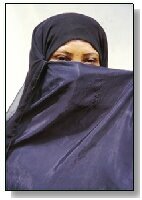
For instance, while Islam teaches their women to cover most of their body parts, it does not instruct or order them to cover with a black “bui-bui” like the ones commonly worn by Waswahili women. The Somali women do cover their bodies as per the Islamic teachings but they do not wear the bui-bui. So is the case with other Muslim women in other societies or communities like in India, Malaysia, or Nigeria, and Tajikistan to name but a few.
Internationally the interweaving of the religion to Arabs continues albeit erroneously. Many people confuse Muslims and make them synonymous with Arabs, when Arabs are not even the majority of the world Muslim population. Although the Islamic religion originated in what is today the Kingdom of Saudi Arabia, the reality is that Islam is not restricted to the Arabic race and to Waswahili. Nor is Islam a racial or tribal community as is the case with Judaism. Because of the ignorance of some people, I have highlighted some hard facts that could perhaps assist in erasing such wrong mindsets regarding Islam and Muslims:
With a population of more than 128 million people, fifty-percent being Muslims, Nigeria has more Muslims than the population of Kenya. All the Nigerian Muslims are black Africans, not Arabs or Waswahili.
The most populous Muslim country in the world is not Saudi Arabia or Egypt but Indonesia with a population of 241 million people, eighty-eight-percent Muslims—212 million Muslims.
Majority of the people are on the assumption that the Israel/Palestinian question is more of a Jewish and Islamic conflict as opposed to the question of political freedom and national independence for the Palestinian people (both Christians and Muslims), and has nothing to do with any religious conflicts. Waswahili are people who were the first to be civilised (ku’staarabika) through their Islamic faith. For instance in order to observe the five times daily prayers, one has to keep oneself clean, dress appropriately. Muslim women’s bodies are not for show or display they have to cover them properly. Now the non-Waswahili Muslims when they are practising Islam and follow their faith’s teaching they are not turning into Waswahili but are being true Muslims by kujista’arabisha. If these Muslims refuse to speak their native languages and stick to Kiswahili, isn’t that one of their individual rights to do so? Isn’t Kiswahili our national language?
Majority of the people are on the assumption that the Israel/Palestinian question is more of a Jewish and Islamic conflict as opposed to the question of political freedom and national independence for the Palestinian people (both Christians and Muslims), and has nothing to do with any religious conflicts. Waswahili are people who were the first to be civilised (ku’staarabika) through their Islamic faith. For instance in order to observe the five times daily prayers, one has to keep oneself clean, dress appropriately. Muslim women’s bodies are not for show or display they have to cover them properly. Now the non-Waswahili Muslims when they are practising Islam and follow their faith’s teaching they are not turning into Waswahili but are being true Muslims by kujista’arabisha. If these Muslims refuse to speak their native languages and stick to Kiswahili, isn’t that one of their individual rights to do so? Isn’t Kiswahili our national language?
The very reason why those who embraced Islam; Wanjiku, Mutua or Kamau do not become Waswahili is because Islam is not a tribe. A religious community is never a racial or a tribal community. I am tempted to ask the writer: why didn’t he, after embracing Christianity, become Mzungu having been baptised and given an English sounding name and speaks the Language of the Queen. If he did not become a white man, then why would the former Wanjiku or Mutua when they embraced Islam and changed their first names to Khadija and Abdalla respectively and adhere to the Islamic dress code by wearing a bui-bui (as is the case with the Khadija) and or kanzu and kofia (as is the with some men) automatically become Waswahili?
Although it is indeed difficult to separate Uswahili and Uislamu (the act of being a Muslim) but being a Muslim does not make one Mswahili (single member of the Swahili community).
Although it is indeed difficult to separate Uswahili and Uislamu (the act of being a Muslim) but being a Muslim does not make one Mswahili (single member of the Swahili community).
Wapwani vis-a-vis Waswahili:
There is a fundamental mistake people make by confusing the Kenyan Muslims, Waswahili and the other Coastal people (Wapwani). Although the province is predominately Muslim, there are a sizable number of indigenous non-Muslims Wapwani—from the populous Mijikenda to the Pokomo of Tana River to the Taitas and Tavetas of the upper Coast section.
The marginalisation of the Coast is not restricted to the Swahili people, but to all the indigenous Coastal people perhaps with an exception of the Taitas and Tavetas who are made to believe that they are not like other Wapwani.
The marginalisation of the Coast is not restricted to the Swahili people, but to all the indigenous Coastal people perhaps with an exception of the Taitas and Tavetas who are made to believe that they are not like other Wapwani.
Coast remains the only province where the natives do not have title deeds for their ancestral lands, and the region’s lands in owned mainly by people from upcountry. An excellent example is the Kenyatta family owning a sizable fraction (if not a quarter) of the province’s land. Or when it comes to employment, the unemployment rate in the province is double that of the national standard. In Education, Coast being the only region, save for the sparsely populated North Eastern province, without a full-fledged university, or even a university college. Utalii College was deliberately established in Nairobi as opposed to the province where the heart of the country’s tourism is mainly located.
Who doesn’t know that the reason the province has a mere small percentage of educated elite is as a result of open discrimination. Government sponsored education scholarships in the ’60s, ’70s, ’80s, ’90s and now in 2000s were not allocated to Wapwani but went to all other regions whose respective native senior bureaucrats and politicians lured them to. Why would Mutahi Karega, for instance, give a scholarship to a boy from Faza, instead of a kid from Mount Kenya region? During former President Moi’s regime a majority of kids from the Rift Valley were the beneficiaries of government scholarship et al. But that is not the issue here.
The issue of Wapwani been marginalised and transparently discriminated is not necessarily restricted to the Waswahili. Wapwani are being fought from every angle through sectarian politics. Let us take the last few years and see how the war against Wapwani was waged. When the Matuga MP Chirau Ali Mwakwere, a Coastal but not Mswahili, was the Minister for Foreign Affairs, the ministry was the focus of all the media houses. Certain journalists from all three major dailies took upon themselves to be the public watchdogs on the ministry. They supposedly used to conduct “regular investigative journalism” and come up with baseless but well crafted damaging reports on the ministry and the minister.
The issue of Wapwani been marginalised and transparently discriminated is not necessarily restricted to the Waswahili. Wapwani are being fought from every angle through sectarian politics. Let us take the last few years and see how the war against Wapwani was waged. When the Matuga MP Chirau Ali Mwakwere, a Coastal but not Mswahili, was the Minister for Foreign Affairs, the ministry was the focus of all the media houses. Certain journalists from all three major dailies took upon themselves to be the public watchdogs on the ministry. They supposedly used to conduct “regular investigative journalism” and come up with baseless but well crafted damaging reports on the ministry and the minister.
When Kenyans were held hostage in Iraq, their then continued captivity was kept as “main news” almost everyday and various commentaries were written in that regard. These journalists ganged up and were “informing” Kenyans that the ministry was not doing anything to secure the hostages’ release. It was an open secret that the minister had dispatched the Riyadh-based Kenyan envoy to handle the diplomatic niceties to secure their release. Truth be told, there was not much the Kenyan government could have done since Kenya had and still has no military presence in the war-torn Iraq. The worse was yet to come.
When Mwakwere, a veteran diplomat, was given to understand that the hostages had been released and went on air to announce the good news to the families of the hostages and the rest of the country, the press claimed that the minister made a fool of himself because the hostages had not been released as perhaps was thought. My question here is this. Why would Mwakwere issue a statement on “the release of the hostages” if he was not assured that the information he was given was credible? What would have been Mwakwere’s personal and or political gain to lie to Kenyans, let alone to the families of the captives?
When Mwakwere, a veteran diplomat, was given to understand that the hostages had been released and went on air to announce the good news to the families of the hostages and the rest of the country, the press claimed that the minister made a fool of himself because the hostages had not been released as perhaps was thought. My question here is this. Why would Mwakwere issue a statement on “the release of the hostages” if he was not assured that the information he was given was credible? What would have been Mwakwere’s personal and or political gain to lie to Kenyans, let alone to the families of the captives?
No one wants to answer this question, because answering the question will tell them that Mwakwere was merely doing his job the way he knew it. But when an upcounty politician such Kabete MP Paul Muite calling a press conference and making wild and reckless allegations against the American and German envoys, here is what Mr. Gitau Warigi of the Nation Group had to say: “Kabete MP Paul Muite has always sought to cultivate the posture of a serious operator who avoids making reckless outbursts. That is why he looked completely out of character when he called a press conference last week to claim that the American and German embassies were plotting, together with Mr. Raila Odinga, to remove President Kibaki from power”. But we are told Mwakwere made a fool of himself and not Muite. Then there were the Koinange street lies and fabrications on the personal credibility of the minister cooked by two media houses that have since been sent to court by the minister.
Now the Foreign Affairs ministry is headed by a non-Coastal politician, the media’s radar has shifted away from it. There are two Kenyan hostages held in Iraq as we speak. We don’t hear anything with regard to the efforts of securing their release. The matter has been left to be handled by a low level ministry official and the so-called investigative journalists see no reason to bring up the matter to the attention of Kenyans. Ukabila and sectarian discrimination at the highest level, why bring the matter when one of their own is in-charge in the ministry. In fact some of the “war against Mwakwere” journalists from the local dailies are now coming out in defence of the country against the Nairobi-based diplomats, something they used to cheer every time the foreign envoys insulted Kenya and its leaders. One may be tempted to ask is it patriotism or tribalism at play here?
Now the Foreign Affairs ministry is headed by a non-Coastal politician, the media’s radar has shifted away from it. There are two Kenyan hostages held in Iraq as we speak. We don’t hear anything with regard to the efforts of securing their release. The matter has been left to be handled by a low level ministry official and the so-called investigative journalists see no reason to bring up the matter to the attention of Kenyans. Ukabila and sectarian discrimination at the highest level, why bring the matter when one of their own is in-charge in the ministry. In fact some of the “war against Mwakwere” journalists from the local dailies are now coming out in defence of the country against the Nairobi-based diplomats, something they used to cheer every time the foreign envoys insulted Kenya and its leaders. One may be tempted to ask is it patriotism or tribalism at play here?
Now the Matuga MP is the Transport Minister, the focus of the biased press has since shifted from Foreign Affairs to where, you guessed it—Transport. For instance, let us take the case when Mwakwere appointed a veteran port management professional to take over as the new Managing Director at the Kenya Ports Authority. There was an onslaught on Mwakwere with various commentaries and editorials (by the three dailies) all opposing the minister’s move simply because the individual hailed from the Coast and is a Muslim. Two dailies in their separate editorials went to the extent of asking for the removal of ministers as the appointing authorities in the parastatals management.
It has since emerged that three ministers, namely Newton Kulundu (Labour), Henry Obwocha (National Planning) and Kivutha Kibwana (Environment and Natural Resources) all have separately appointed their tribesmen (although all qualified), as Chief Executive Officers for three different parastatals falling under their respective dockets. Iin its front page story titled: “Government has made tribalism acceptable practice” one of the dailies crafted the report in such a style that the blame is mainly shifted to the government as opposed to the individual ministers—cleverly lessening the effects of the three ministers’ tribal based appointments. Not a single editorial has been written against the conspicuous tribal appointments. This is unlike what we saw during the appointment of Abdalla Hemed Mwaruwa for the KPA top position. Is it because the ministers are not Wapwani, hence they need protection?
For obvious reason the youthful Mvita MP Najib Balala had been a darling of the press because he has allowed himself to play second fiddle to some Liberal Democratic Party (LDP) politicians at national level. Unlike Mwakwere who on the onset refused to be an errand-person of the LDP luminaries who automatically became a marked person by the press. Now that the former National Heritage minister has declared his interest to vie for LDP presidential ticket his fortunes are about to change for him. Let us wait and see how the press will start to trash him. I am sure our illustrious investigative journalists are already burning the midnight candles (due to the power rationing) looking for dirt on Balala.
For obvious reason the youthful Mvita MP Najib Balala had been a darling of the press because he has allowed himself to play second fiddle to some Liberal Democratic Party (LDP) politicians at national level. Unlike Mwakwere who on the onset refused to be an errand-person of the LDP luminaries who automatically became a marked person by the press. Now that the former National Heritage minister has declared his interest to vie for LDP presidential ticket his fortunes are about to change for him. Let us wait and see how the press will start to trash him. I am sure our illustrious investigative journalists are already burning the midnight candles (due to the power rationing) looking for dirt on Balala.
The issue is not Waswahili per se; it is the bigotry on Wapwani because of religious and sectarian discrimination which is assisted by the powerful press. The overt campaign is first and foremost waged against Wapwani, it gets intensified when they (Wapwani) are Muslims, be they Wadigo, Waborana or Wapokomo. It is deepened if they are Waswahili or Arabs. Nationalism has been thrown out of the window, tribalism and sectarianism has taken over in our country. Hence we see the emergence of presidential candidates supposedly with national candidacies outlook but in reality representing their native tribes and regions. We see Raila Odinga for Nyanza and the Luo community, William Ruto representing Rift Valley and the larger Kalenjin tribe. Then there is Kalonzo Musyoka and Musalia Mudavadi for Eastern and Western provinces respectively. Not to be left behind the latest entrant to the race, Balala for the Coast people and the Muslim community. And on it goes or will go.
Everything is everything; one must be judged by his/her deeds and actions. Their own personal curriculum vitae if you may, instead of inheriting labels coined by those who want to divide and demean people by putting more emphasis on bigotry. God Save Kenya and Kenyans from themselves!
Source: Kenya Times
eMail: omarahmedali@gmail.com
Subscribe to:
Posts (Atom)